U.S. History and AP U.S. History Usable Resources for Teachers and Students
  • Home
  • INFO.
    • Blog
    • Contact & Tutoring
    • AP Grader/Table Leader Memories
    • Hall of Honor
    • Support
  • AI
    • Which Engine to Use
    • Using AI with Student Scripts
  • resources
    • APUSH >
      • WHICH TEXTBOOK SHOULD you USE?
      • AP GENERAL INFO.
      • AP Classroom
      • The SAQ, LEQ, DBQ
      • STUDENT REVIEW
    • Syllabus Samples
    • Class Starters
    • Historic Periods & Reading Guides >
      • Semester One
      • Semester Two
    • Textbook Chapters
    • Teacher Tools
    • The Gymnasticon
    • Simulations
    • DEBATES (Forensics)
  • Enrichment
    • Quiet Space
    • LITERATURE, MUSIC , AND ART >
      • Peacefield Library
      • Gilbert Stuart's Museum of American Art
      • The Glass Armonica
    • The Nutmeg Tavern
    • American Money/Coinage
    • The Conestoga Wagon
    • Rick's
  • Home
  • INFO.
    • Blog
    • Contact & Tutoring
    • AP Grader/Table Leader Memories
    • Hall of Honor
    • Support
  • AI
    • Which Engine to Use
    • Using AI with Student Scripts
  • resources
    • APUSH >
      • WHICH TEXTBOOK SHOULD you USE?
      • AP GENERAL INFO.
      • AP Classroom
      • The SAQ, LEQ, DBQ
      • STUDENT REVIEW
    • Syllabus Samples
    • Class Starters
    • Historic Periods & Reading Guides >
      • Semester One
      • Semester Two
    • Textbook Chapters
    • Teacher Tools
    • The Gymnasticon
    • Simulations
    • DEBATES (Forensics)
  • Enrichment
    • Quiet Space
    • LITERATURE, MUSIC , AND ART >
      • Peacefield Library
      • Gilbert Stuart's Museum of American Art
      • The Glass Armonica
    • The Nutmeg Tavern
    • American Money/Coinage
    • The Conestoga Wagon
    • Rick's

Which books and magazines will best serve the U.S. History Teacher?

Picture


​"Freedom can exist only in the society of knowledge. Without learning, men are incapable of knowing their rights, and where learning is confined to a few people, liberty can be neither equal nor universal."
-Benjamin Rush
​


​

NEW TO THE FIELD

Picture
New York Times Bestseller “This captivating portrayal of Teddy is Bret Baier’s gift to us. From Roosevelt’s resilience over tragedy to his heroism in war, from his midnight rambles as police commissioner to his dramatic fights for reform as governor and president, Baier summons the irrepressible spirit of the man. What an engaging storyteller! What a joy to read!” —Doris Kearns Goodwin
Picture
A propulsive, never-before-told story of one family’s shocking involvement as Nazi and Japanese spies during WWII and the pivotal role they played in the bombing of Pearl Harbor.
-Amazon

Picture
We the People builds on the Amendments Project, an initiative Lepore spearheaded that tracks more than 11,000 amendments proposed in Congress between 1789 and 2022. The vast majority of these efforts never came to fruition, with just 27 amendments ratified by the states since 1791. -Smithsonian
Picture
Bacon grew up in the Great Lakes region and had long been aware of the Fitzgerald. Instead of attempting to determine what led the ship to sink (theories abound), but no definitive answer has emerged), the journalist wanted to shine a light on the freighter’s crew. 
-Smithsonian
Picture
Unlike Jones’ previous scholarly studies, The Trouble of Color is a deeply personal narrative. Artfully blending genealogy, historical research and self-reflection, the book is both a testament to the importance of preserving Black history and a compelling account of a single family’s trials and successes.
-Smithsonian
Picture
Based on interviews with the art thief and his lifelong best friend, Al Dotoli, as well as police records, newspaper accounts and other sources, the book centers on Connor’s 1975 theft of a Rembrandt van Rijn painting housed at the Museum of Fine Arts, Boston.
-Smithsonian
Picture
It was only after Rabideaux’s death in 2011 that Pember decided to investigate her mother’s past in depth, connecting anecdotes to written records and other archival materials. The initial discoveries the journalist made pushed her to begin a project whose scope went far beyond her own family. 
-Smithsonian
​
Picture
Quickly transitioning from Earhart’s book publisher to her romantic partner, Putnam devised increasingly dangerous publicity schemes that culminated in the aviator’s fatal attempt to fly around the world. But he isn’t entirely to blame for Earhart’s death, Shapiro argues: The trailblazing pilot was highly ambitious herself, and “she recognized in [Putnam] a strategic ally who could propel her stalled magnificent career ambitions forward and provide an escape from financial instability.”
-Smithsonian 
Picture
Ostensibly a work of military history focused on the war’s middle years, 1777 to 1780, The Fate of the Day reads more like a novel, capturing readers’ attention over more than 800 pages. Atkinson’s research skills and his ability to extract compelling details that bring centuries-old stories to life make this book a timely and necessary read, especially as the U.S. prepares to celebrate its 250th anniversary in 2026.
-Smithsonian

Picture
The book is commended for its unmatched knowledge of the West compared with other accounts and its captivating storytelling style. It is also recognized for its scrupulousness in examining the associations between various gatherings on the boondocks, including local Americans, European pioneers, and African Americans, and the role of government approaches in molding the advancement of the boondocks. 
-Goodreads
​
​

AMERICAN CLASSIC LITERATURE

​American Literature Classics Library
Picture
Picture
How would you rank our great American novels?
Click here

THE MAGAZINES & JOURNALS

Click on the icon to visit each publications website.
Picture
American Heritage is a timeless classic. It is a reliable and deeply valuable resource--its archive is particularly useful for teachers. It treats the past with seriousness and respect, favoring clear narrative, strong evidence, and historical context over trends or slogans. The writing models how history should be told—thoughtful, balanced, and grounded in primary sources.
​
Most importantly for the classroom, the magazine presents Americans of the past as real people rather than symbols, encouraging students to think critically and humanely about history. In a time of shortcuts and oversimplification, American Heritage remains a steady guide—traditional in craft, yet enduringly relevant. 
Picture
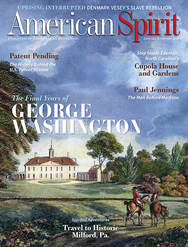
American Spirit is a solid supplemental resource for U.S. history teachers who want to bring historical content into the classroom in an engaging, readable, and accessible level. Topics are varied and often connect political history with social, cultural, and economic themes, which align well with modern U.S. history standards.
​

The writing is clear without being overly simplified, and articles are short enough to fit into a lesson or homework assignment. Visuals, timelines, and sidebars add clarity and support student comprehension. American Spirit is a practical and teacher-friendly magazine that adds depth and interest to U.S. history instruction.
Picture
The Journal of American History stands as one of the most respected pillars of the historical profession. Published by the Organization of American Historians, it reflects the craft of history as it is practiced at the university and professional level—careful, evidence-driven, and deeply engaged with interpretation rather than simple narration.

The journal excels in depth and scholarship. That same depth makes the journal inaccessible for most high school students. The language is dense, the arguments abstract, and the assumed background knowledge substantial. Direct student use would be limited to advanced learners or carefully excerpted passages.
The Journal of American History is not meant for daily classroom reading, but it belongs on the professional bookshelf of any serious U.S. history teacher.
Picture
The American Historical Review, published by the American Historical Association, is the flagship journal of the profession. It carries the weight of tradition, echoing more than a century of scholarship. Its scholarship is meticulous, the arguments carefully constructed, and the expectations of evidence uncompromising. Unlike more specialized journals, AHR ranges widely—across eras, regions, and approaches. 
​

Its review essays are particularly strong. They do more than summarize books; they map debates, trace intellectual lineages, and clarify where consensus ends and contention begins. 
For students, the journal is largely out of reach. Articles often assume graduate-level training and familiarity with theoretical frameworks that rarely appear in secondary curricula. The prose can be demanding, and the focus is analytical rather than narrative. Even advanced high school students would need significant guidance to engage meaningfully with full articles. For teachers, AHR serves to deepen content knowledge, refines thinking, and models how historians argue with precision and restraint. While it offers little in the way of ready-made classroom material, it strengthens the teacher’s command of subject.
Picture
Unlike academic journals, Smithsonian is written for the public. The magazine serves as a bridge between scholarly history and everyday curiosity.

The magazine’s greatest strength is accessibility. Articles are clearly written, engaging, and grounded in solid research without drowning the reader in footnotes or jargon. History is told as story—rooted in people, places, and moments that linger in the mind. This makes Smithsonian especially valuable for sparking student interest and humanizing historical subjects that can otherwise feel distant or abstract.

Its scope is also broad. American history sits comfortably alongside science, culture, archaeology, and the arts, reinforcing an older truth: the past does not live in tidy categories. For teachers, this interdisciplinary approach mirrors the way history actually unfolds.
Visuals are another asset. Photographs, illustrations, and artifacts are not decorative afterthoughts but integral to understanding. 
Because it is a popular magazine, Smithsonian does not engage deeply with historiographical debate. Arguments are usually implied rather than contested, and complexity is often smoothed for readability. For advanced analytical work, it cannot replace scholarly sources.
​
In the classroom, Smithsonian Magazine is immediately useful. Articles can be assigned whole or in part, used for discussion, paired with primary sources, or employed as models of strong historical writing. It supports reading comprehension, contextual understanding, and curiosity—three virtues every history teacher quietly hopes to cultivate.


Picture
Published by the Phi Beta Kappa Society, The American Scholar has a more open direction—one where ideas are meant to be savored, prose matters, and history is woven together with literature, philosophy, and civic life. 

Articles are carefully crafted, thoughtful, and reflective, often shaped by historians, scholars, and experienced essayists who value clarity without sacrificing depth. Its essays often explore themes of citizenship, education, culture, and the meaning of the American Dream. 
​

Because the magazine favors reflection over coverage, it is not comprehensive or systematic. It does not aim to survey periods or provide step-by-step explanations of events. Some articles may assume a mature reader’s patience and background knowledge, making them better suited for teachers or advanced students rather than general classroom use.​
Picture
This magazine is for readers who want history told plainly and well. It favors narrative over theory, story over debate, and clarity over complexity.

The magazine’s greatest strength is readability. Articles are written in clear, direct prose and focus on recognizable topics: wars, presidents, movements, turning points, and everyday life in earlier eras. This makes the material immediately approachable for students and useful for teachers looking to reinforce or enrich textbook content. Timelines, sidebars, maps, and illustrations support comprehension and help students place events in context. 
​
Because it is a popular history magazine, American History does not delve deeply into historical debate or interpretation. Perspectives are usually straight forward and conventional, and complex scholarly disagreements are rarely explored in detail. 
RETURN TO TOP OF PAGE